When you purchase through links on our site , we may earn an affiliate commission . Here ’s how it work .
A copying wrongdoing appear to be responsible for for critical features of the human brain that distinguish us from our closest primate kin , new research determine .
When prove out in mice , researcher find this " fault " make the rodents ' brain cell to move into place quicker and enabled more connexion between brain cells .
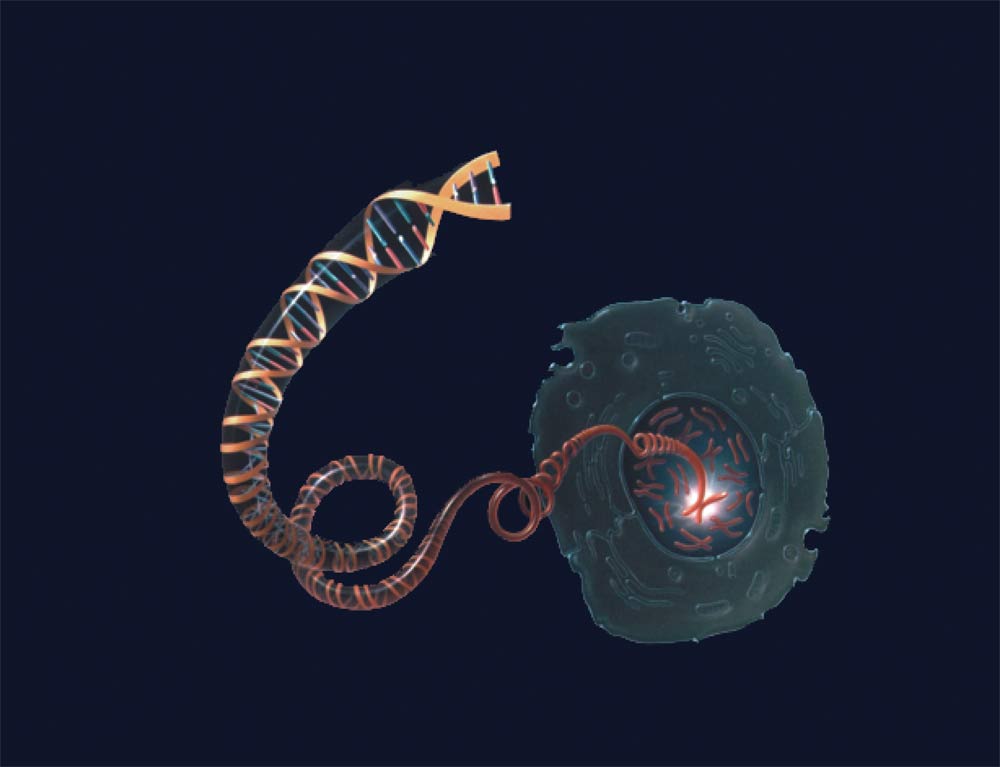
An error that created a duplicate gene long ago may be responsible for critical features of the human brain, according to a new study. (Shown here, a DNA molecule unwinding from a chromosome inside the nucleus of a cell.)
When any cell split , it first copies itsentire genome . During this process , it can make errors . The cadre usually fixes erroneousness in the DNA . But when they are n’t fix , they become lasting changes call off chromosomal mutation , which are sometimes hurtful and sometimes helpful , though usually innocent .
One type of error is duplication , when the desoxyribonucleic acid - copy machinery accidentally replicate a section of the genome double . The second written matter can be exchange in future written matter — gainingmutationsor losing persona .
The researchers read the human genome for these duplication , and found that many of them seem to play a role in the developing brain . [ 10 Fun Facts About the learning ability ]

" There are just about 30 genes that were selectively replicate in human , " field of study research worker Franck Polleux , of The Scripps Research Institute in La Jolla , Calif. , said in a statement . " These are some of our most late genomic innovations . "
An extra copy of a factor give phylogenesis something to cultivate with : Like modeling clay , this gene is n’t substantive like the original copy , so changes can be made to it without damaging the ensue organism .
The researcher studied one specific gene , called SRGAP2 , which they think has been duplicated at least twice during the course ofhuman evolution , first about 3.5 million years ago and then again about 2.5 million years ago .

The 2nd , more late , duplication seems to be incomplete , with only part of the cistron being parallel . The research worker think this partially duplicated gene is able to interpose with the actions of the original , ancestral copy of SRGAP2 . When the investigator contribute the partially duplicated gene copy to the mouse genome ( mice do n’t ordinarily have it ) it seemed to speed the migration of encephalon cells during ontogeny , which ca-ca brain organization more efficient .
These cells that expressed the incomplete duplication of SRGAP2 also had more " vertebral column " — knoblike extensions on the cell surface that tie in with other brainpower cells , which make them take care more likehuman encephalon cells .
Interestingly , the uncompleted copy of the factor seems to have bear witness up just as the extinct homininAustralopithecusmade elbow room for the genusHomo , which led to modernistic mankind . That ’s also when the brains of our ancestors began to inflate and when dramatic changes in cognitive abilities are potential to have emerge .

" We may have been expect at the incorrect character of mutations to explain human and gravid ape differences , " study research worker Evan Eichler , of the University of Washington , said in a statement . " These episodic and large gemination events could have permit for radical — potentially Earth - shattering — changes in psyche development andbrain part . "
The cogitation was put out in the May 11 issue of the daybook Cell .


